Some works survive not by resisting time, but by changing identity within it. “Sposa son disprezzata” first carried the anguish of a man sung by Farinelli; a year later, on Vivaldi’s stage, it became the voice of a rejected woman. In Cecilia Bartoli’s interpretation from the 1991–92 period, this nearly three-hundred-year journey becomes something closer to a private confession, suspended between voice and piano.
Those few minutes sung by Bartoli
For this Journal, Cecilia Bartoli’s interpretation of “Sposa son disprezzata” is the reference recording. Bartoli recorded the aria with pianist György Fischer; it appeared on the 1992 album If You Love Me: 18th Century Italian Songs. A Savoy Hotel recital from the same period also contains one of the best-known Bartoli performances of the piece.
There is no large Baroque orchestra in this version. Only voice and piano. The theatrical scale of the opera contracts, while the emotional proximity of the words grows. The opening phrase is already powerful enough on its own: “Sposa son disprezzata” — “I am a wife held in contempt.” But this was not the aria’s first form.
Before Vivaldi
Today “Sposa son disprezzata” is closely associated with Antonio Vivaldi in the minds of many listeners. Yet the melody’s story begins a year earlier. In 1734, Geminiano Giacomelli’s Merope was staged in Venice, containing the earlier form of the same music. The libretto was based on Apostolo Zeno, and in the first production Farinelli sang the role of Epitide.
The aria was called “Sposa, non mi conosci” — “Wife, do you not recognise me?” A year later Vivaldi would take this music for Bajazet, alter the words, and move it into the dramatic world of another character.

For those curious about Farinelli
The extraordinary life of Carlo Broschi — Farinelli, one of the most celebrated castrato stars of the Baroque era — was dramatized in Gérard Corbiau’s 1994 film Farinelli, released in some territories as Farinelli: Il Castrato. It is not a historical documentary and reshapes events for dramatic purposes. Even so, it is a vivid companion for entering the spectacle of eighteenth-century opera, the celebrity culture surrounding castrati, and Farinelli’s exceptional place within it.
Official trailer: Farinelli — Official Trailer.
1735: the same melody, another opera
A year later Antonio Vivaldi prepared Bajazet (Bayezid I) for Verona. The work was a pasticcio: Vivaldi combined his own music with arias by other composers including Riccardo Broschi, Johann Adolf Hasse and Geminiano Giacomelli.
Giacomelli’s “Sposa, non mi conosci” thus left Merope and passed to the character of Irene in Bajazet. Much of the melody remained familiar. But it now told a different story.
The same melody, two different texts
Merope is a story of power, family and lost identity centred on the throne of Messenia. Polifonte has seized the kingdom; Queen Merope’s son Epitide, believed dead, is in fact alive and returns under the identity of a stranger named Cleone. “Sposa, non mi conosci” comes at the point where Epitide is trying to reveal who he truly is but can convince neither his wife Argia nor his mother Merope. In one phrase he addresses Argia as a husband, in another Merope as a son. The aria’s fundamental dramatic feeling is the pain of not being recognised by the people he loves and of being unable to prove his own identity.
Bajazet (Bayezid I), by contrast, revolves around the captive Ottoman ruler Bayezid, his daughter Asteria, Andronico, who loves Asteria, Tamerlano, and Irene, whom Tamerlano is expected to marry. While the marriage to Irene is anticipated, Tamerlano turns his attention to Asteria. Irene arrives at court without immediately revealing her identity and observes events while presenting herself as her own envoy. “Sposa son disprezzata” comes in the second act, when Irene understands that Tamerlano has moved away from the promise made to her and toward Asteria. Her address is essentially an inward lament directed at Tamerlano: not the shock of being unrecognised, but the humiliation of being devalued by someone who knows her perfectly well, while attachment still remains.
The same melody therefore performs two different dramatic functions: in Merope, “Recognise me”; in Bajazet, “Why do you treat me as though I no longer matter?”
Moving an aria from one opera to another
From a modern perspective, the idea of a composer taking another composer’s aria and placing it inside his own opera may seem surprising. In eighteenth-century opera, however, the concept of a fixed work was more fluid. Arias could be associated not only with an opera but also with the star singers who performed them; they could travel between cities and productions, acquiring new texts and new dramatic contexts.
“Sposa son disprezzata” is an unusually clear surviving example. The music itself does not merely travel; the character carried by the music changes. The voice of Epitide, sung by Farinelli, becomes the voice of Irene a year later.
Then it left the opera stage as well
During the nineteenth century, as earlier Italian vocal repertory was rearranged and increasingly used in vocal training, arias of this kind began to live independently from the operas that had contained them. A listener no longer needed to know Merope or Bajazet. An aria could survive on its own in the concert hall.
Cecilia Bartoli: the third life
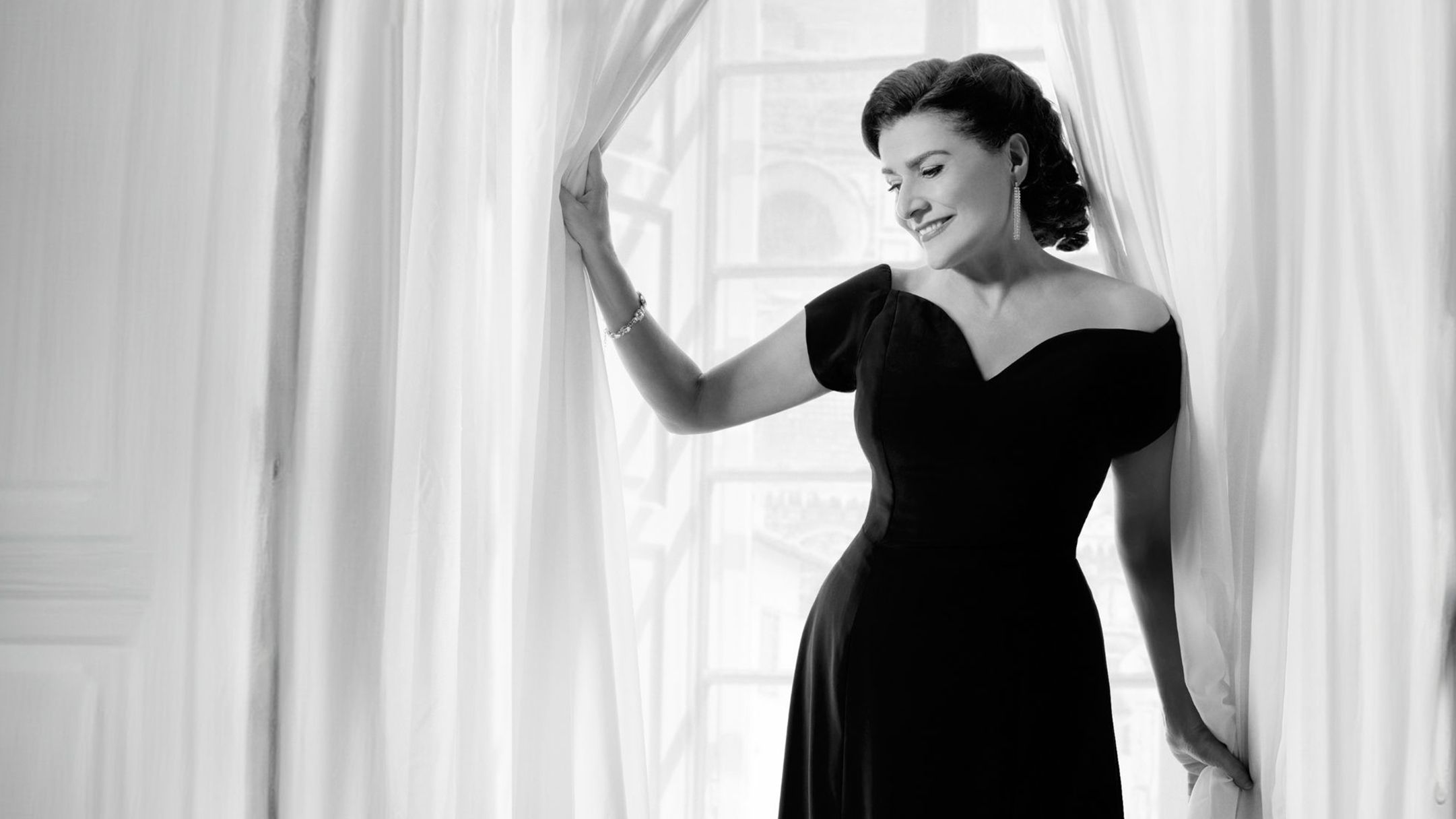
In 1991 Cecilia Bartoli was only 25 and at the beginning of a rapidly expanding international career. Cecilia Bartoli: A Portrait shows her recording at La Fenice, working with her mother and only singing teacher Silvana Bazzoni Bartoli, and speaking about her approaches to Mozart and Rossini. The documentary is followed by a recital recorded that same year at London’s Savoy Hotel with György Fischer at the piano; the second item on the programme is “Sposa son disprezzata”.
What makes this recording interesting is not only Bartoli’s performance but the portrait that precedes it. We first see the musical family in which she grew up, the way she worked with her mother, and something of her approach to interpretation; then we hear the same young Bartoli in this slow, inward aria with only piano accompaniment. The performance becomes a natural continuation of the biographical portrait.
Detailed English content notes: Cecilia Bartoli: A Portrait.
Three lives of one melody
For this reason, it is incomplete to think of “Sposa son disprezzata” simply as a beautiful Baroque aria. The work has a biography of its own.
Its first life, 1734: Giacomelli’s Merope. Farinelli as Epitide. A man trying to make his wife and mother recognise who he is.
Its second life, 1735: Vivaldi’s Bajazet (Bayezid I), a pasticcio. The same melody passes to Irene. It is no longer the voice of an unrecognised man, but of a woman watching a promise made to her being abandoned.
Its third life, the modern concert and recording repertory: Cecilia Bartoli and György Fischer. The opera stage falls away; the aria becomes an independent musical work.
Perhaps that is exactly what explains its endurance: it did not remain the same. Its character changed, its text changed, its opera changed, its mode of performance changed; even the name of its composer shifted at times in listeners’ memories. Yet the melody continued to live through all of those transformations.
Some works do not survive for three hundred years like preserved objects. In every era they become someone else’s again. “Sposa son disprezzata” is one of them.