ITT SL 59 Automatic: The mechanical memory of the cassette
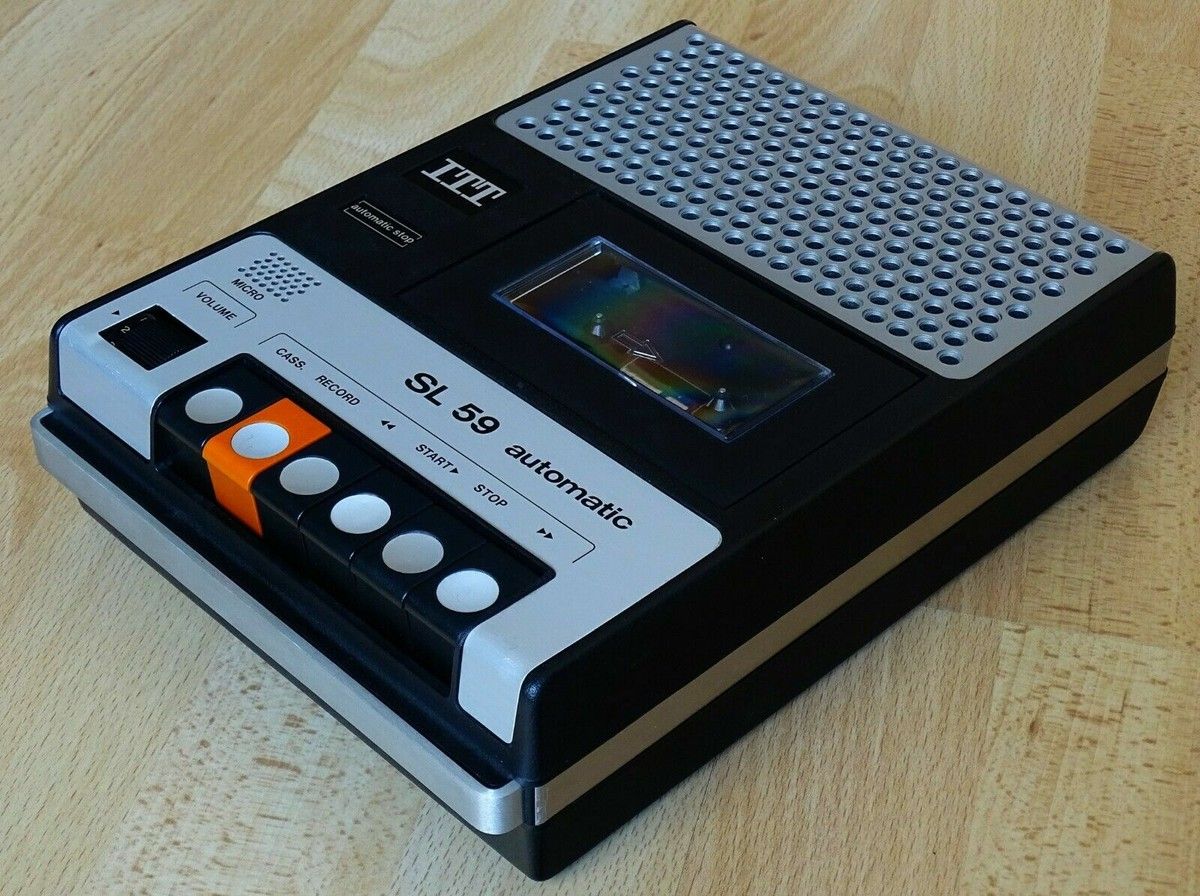
Playing a song today is almost an invisible gesture. We touch a screen and sound begins. A machine such as the ITT SL 59 Automatic recalls a time when listening and recording were far more physical acts: taking the cassette in your hand, opening the compartment, placing the tape, pressing a genuinely mechanical key and waiting for the reels to begin turning. Sound was not only something heard; it was the result of a small ritual. Released in 1979, the SL 59 is striking for its mechanical honesty. It makes no attempt to conceal what it does. A broad perforated metal speaker grille occupies the upper section, beside a transparent window that makes the cassette itself visible. Below sits a row of substantial controls, each assigned to a distinct physical action. The orange record key is more than a graphic accent: it establishes a clear hierarchy at a glance and reduces the chance of an accidental recording. Against the black, silver and off-white body, that single colour is enough to organise the entire interface. Technically the SL 59 was a modest portable monophonic cassette recorder: a two-head, single-channel mechanism using standard Type I cassette tape at 4.76 cm/s, with a built-in microphone and automatic stop. It could run from mains power or five C-cell batteries. None of these specifications is remarkable on its own. What makes the object more interesting today is the brief moment it represents, when analogue audio culture and the emerging personal-computer age overlapped. Its rear DIN connection also made recorders of this type suitable for loading data into early home computers such as the BBC Micro, Acorn Electron and Sinclair machines. That overlap makes the cassette a more unusual object than nostalgia sometimes allows. The same magnetic tape could contain a song, a recorded conversation or a computer program. Music and data had not yet become completely separate worlds. A recorder used by one child to capture a favourite song from the radio could sit on another desk as part of a home-computing setup. The same mechanism could carry both personal memory and early digital information. The SL 59 also embodies the visual language of that transitional period. It is not minimalist in the contemporary sense, yet almost every element explains its purpose. The speaker looks like a speaker, the cassette mechanism remains visible, and the controls visibly move. In contrast with today's increasingly seamless interfaces, there is an unusually direct relationship between form and function. That may be why the SL 59 remains appealing. It was not a heroic object designed to announce the future. In its own time it was an ordinary, accessible domestic tool. Seen now, however, it captures a very particular technological moment at the end of the 1970s and beginning of the 1980s: mechanical buttons, magnetic tape and the first generation of personal computers sharing the same desk. Some objects are worth returning to not because they became icons, but because they quietly preserve the texture of everyday life from another era.
View source ↗Back to references